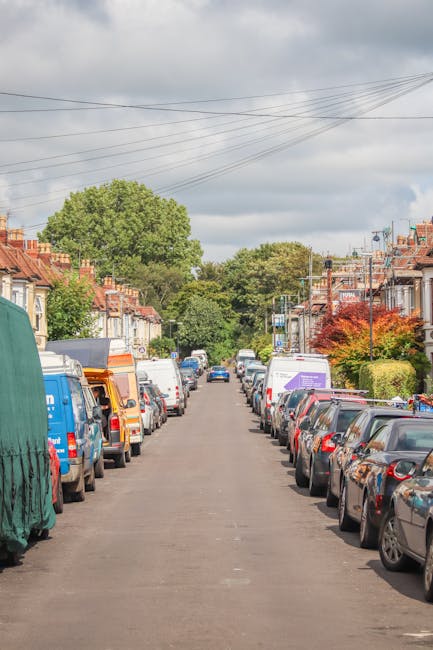
Bromley Council parking rules for removal vans

Moving house is stressful enough without a parking ticket sitting on the dashboard by noon. If you are trying to work out the Bromley Council parking rules for removal vans, the tricky bit is usually not the lifting and loading - it is the kerb space, timing, and permissions around it. In Bromley, as in much of London, a removal van can make a move much smoother if you plan the parking properly. Get it wrong, and you can end up with blocked access, a frustrated crew, or an avoidable penalty. Not ideal, to be fair.
This guide breaks the topic down in plain English: why the rules matter, how parking arrangements usually work for removal vans, what to check before move day, and the common mistakes people make when they are juggling keys, boxes, and one very heavy sofa. You will also find a practical checklist, a comparison table, and a realistic example so you can make decisions confidently rather than guessing at the kerb.
Why Bromley Council parking rules for removal vans matters
Parking is not a side issue on moving day. It shapes how long the job takes, how hard the team has to work, whether neighbours can pass, and whether the van can stop close enough to the property to make lifting safe. In a busy Bromley street, that can be the difference between a calm start and a long, awkward morning with boxes getting wet in the drizzle while someone circles for a space. London weather has a way of making simple things feel slightly theatrical.
The Bromley Council parking rules for removal vans matter because they help you avoid three very common problems: obstruction complaints, parking enforcement action, and unnecessary delays. If you have ever watched a driver reverse carefully into a narrow residential road while someone shouts directions from a front step, you will know how quickly a small parking issue becomes a whole logistics problem.
There is also a safety angle. Removal work involves trolleys, heavy furniture, people moving in and out of the property, and doors opening into traffic. If the van is parked badly, the crew may have to carry items further than planned, which increases the risk of damage or injury. The less distance between van and door, the better - within the rules, of course.
Practical takeaway: for a removal van, parking is not just about convenience. It affects compliance, safety, timing, neighbour relations, and the overall cost of the move.
How Bromley Council parking rules for removal vans works
There is no single one-size-fits-all answer, because parking restrictions vary by street, bay type, time of day, and whether the area is controlled by permit, pay-by-phone parking, yellow lines, loading restrictions, or resident-only rules. The sensible way to think about it is this: a removal van is still a vehicle, and the normal parking restrictions still apply unless a specific exemption, dispensation, or temporary arrangement has been agreed.
In practice, the process usually comes down to a few checks:
- What restrictions are marked on the road or nearby signs?
- Is loading allowed, and if so, for how long?
- Does the street require a permit, visitor permit, or separate authorisation?
- Is the van likely to block access, driveways, or essential services?
- Do you need to arrange suspension of a bay or another temporary parking measure?
For many moves, the practical issue is not a lack of space so much as a lack of certainty. People assume a van can "just stop outside for half an hour." Sometimes that works. Sometimes it does not. A loading bay may be time-limited, or a bay suspension may be required if you need to reserve space for a larger vehicle. If you are hiring professional movers, they will often ask about access for exactly this reason - because a lorry-sized van and a narrow road are not always friends.
You should also think about timing. Early mornings can be quieter in some streets, but commuter parking, school runs, or refuse collection can change access quickly. Midday may look easier on paper, then suddenly the road fills with local traffic and the "simple" unloading turns into an awkward three-point shuffle. A little planning goes a long way.
Where restrictions are unclear, the safest approach is to treat the street as controlled until you have checked the signs and any local parking arrangements. That is boring advice, but it saves money. And let's face it, most people would rather spend that money on unpacking help, not penalties.
Key benefits and practical advantages
Getting parking right for a removal van is one of those small decisions that pays for itself quickly. It can shave time off the move, reduce stress, and prevent last-minute reshuffling of the team. That sounds obvious, but on moving day obvious things are often the first to disappear.
Here are the main benefits:
- Faster loading and unloading: the van can sit close to the property, which keeps the job moving.
- Lower risk of damage: fewer trips, shorter carries, and less chance of dropping items on a tight path or across a road.
- Reduced enforcement risk: you are less likely to receive a ticket or be asked to move on at the worst possible moment.
- Better crew efficiency: removal teams work more smoothly when they are not managing parking problems at the same time.
- Less neighbour friction: a van parked sensibly and legally tends to create fewer complaints.
There is another, quieter benefit too: peace of mind. Once the parking is sorted, one large chunk of uncertainty drops away. You can focus on the kettle, the paperwork, the keys, and the box labelled "important documents" that everyone says they packed but nobody can quite remember seeing.
For family moves, this matters even more. If children, pets, or older relatives are involved, you want the day to feel controlled rather than chaotic. A van parked legally and logically outside the property can make the whole scene feel less like a scramble and more like a plan that is actually working.
Who this is for and when it makes sense
This guidance is useful for anyone moving in, out of, or within Bromley who expects to use a removal van, whether that means a small van for a flat move or a larger vehicle for a full household. It also helps landlords, tenants, estate agents, and anyone coordinating a move on behalf of someone else. If you are the person everyone turns to for "just sorting the parking," this is probably for you.
It makes particular sense when any of the following apply:
- You live on a road with controlled parking, permits, or loading restrictions.
- The property has no driveway or private forecourt.
- The van will need to stay outside for more than a very short stop.
- You expect a larger removal vehicle, not just a car-derived van.
- The road is narrow, busy, or shared with school traffic or commuter parking.
- You are moving at a peak time, such as a weekend or month-end.
It also matters if you are moving fragile or bulky items. That old wardrobe may look harmless in the bedroom, but once it is halfway through the hallway, everyone suddenly remembers how awkward the staircase is. If the van is parked awkwardly down the road, the time and effort multiply fast.
For movers themselves, understanding local parking rules is part of providing a professional service. For householders, it is part of avoiding surprises. For both, the goal is the same: keep the day moving without unnecessary drama.
Step-by-step guidance
If you want a sensible way to approach Bromley Council parking rules for removal vans, use this sequence. It is simple, but in real life simple beats rushed every time.
- Check the exact street restrictions. Read nearby signs, bay markings, and kerb lines carefully. A lot of mistakes happen because people assume the whole road works the same way. It often does not.
- Identify whether loading is permitted. Some roads allow loading only at certain times or under certain conditions. If there are yellow lines, do not assume that means unlimited stopping. It rarely does.
- Decide whether a parking suspension or special arrangement is needed. If the van must reserve a bay, or if the street is especially tight, this may be the cleanest solution. The exact process can vary, so plan early.
- Speak to the removal company before move day. Tell them about access, steps, lifts, and where the van can realistically stop. Good crews appreciate accurate information. It saves everyone from guesswork.
- Allow extra time. If the parking plan is tight, do not schedule the van for the exact minute the keys are handed over. Give yourself breathing room.
- Prepare a backup position. If the first stopping point is occupied, where will the van go next? A nearby legal alternative is often enough to keep the move on track.
- Keep evidence of any permissions or arrangements. If a parking bay has been suspended or a temporary arrangement has been agreed, make sure the paperwork is available on the day.
A useful habit is to do a short walk of the route from the van to the front door the day before. You will notice things in daylight that you miss when you are carrying a box at 8 a.m. - a low branch, a narrow gate, a step you forgot about, a driveway you assumed was usable. It sounds small. It is not small.
If you are moving with professional help, ask the crew what size vehicle they are sending. A compact van and a long wheelbase van behave very differently in a Bromley cul-de-sac. A one-minute conversation can prevent a much longer argument later.
Expert tips for better results
After a lot of move-day planning, a few practical habits stand out. These are the things that usually make the day easier, not just theoretically better.
1. Treat the street signs as the final word. Online assumptions are useful for planning, but the sign on the road is what matters in the moment. If the sign and your memory disagree, trust the sign.
2. Think like the driver, not just the resident. Ask yourself whether a van can swing in, stop, and leave without blocking the road for everyone else. If the answer is "sort of", that usually means "not really".
3. Build in time for awkwardness. Every move has a strange 10-minute patch where one person cannot find the keys, the lift is busy, or a mattress gets caught on a corner. That is normal. Leave room for it.
4. Keep neighbours informed when appropriate. A quick heads-up can reduce complaints, especially on tight streets. Nobody loves a surprise van outside their kitchen window, particularly first thing in the morning.
5. Use cones or informal space markers only if they are allowed and sensible. Do not rely on them as a substitute for proper permission. People sometimes act as if an old plastic cone creates a legal parking space. It does not.
6. Protect the loading path. If there is a narrow entrance, lay down coverings or clear the route in advance if appropriate. Little bits of planning save a lot of wear and tear.
7. Keep one person on parking duty. Not everyone needs to be helping with the van at once. One calm set of eyes at the front gate can be worth a lot.
These are the small habits that separate a decent moving day from one that feels unnecessarily hard. Honestly, that is half the battle.
Common mistakes to avoid
Most parking problems for removal vans come from very ordinary mistakes. The good news is that they are avoidable once you know what to look for.
- Assuming loading is always allowed. It may not be, or it may be limited by time and place.
- Leaving parking arrangements until the last minute. By then, your options are much narrower.
- Forgetting about height, width, and turning space. A van may technically fit on a road but still be impossible to manoeuvre safely.
- Parking across dropped kerbs or driveways. That quickly creates conflict and may trigger enforcement or complaints.
- Not telling the removal crew about restrictions. They can only plan around the information they have.
- Ignoring peak traffic patterns. School times and rush periods can turn an easy road into a headache.
- Assuming neighbours will mind less than they do. Sometimes they are fine. Sometimes not. Better to check than assume.
There is also the classic mistake of overconfidence. Someone says, "It'll be fine, we'll just stop outside." That phrase has launched more problems than people like to admit. Fine is nice. Confirmed is better.
If the move is complex, the safest approach is to plan for the least forgiving scenario, not the best one. That means checking signage, allowing extra time, and having a backup route for the van. A bit cautious? Maybe. But cautious saves stress.
Tools, resources and recommendations
You do not need a toolbox full of apps and paperwork to handle a move, but a few simple resources can make the job much easier.
- Parking signs and bay markings: these are your first reference point and often the most important one.
- Your tenancy or purchase paperwork: useful for move dates, access notes, and building rules.
- Removal company access checklist: a short written summary of road width, steps, lift access, parking issues, and timing concerns.
- Phone camera: take clear photos of the parking signs, the street layout, and any restrictions before moving day. It can save a lot of confusion later.
- Household contact list: keep everyone involved informed, especially if keys, parking arrangements, or access windows change.
If you are comparing move options, it can also help to read about practical moving support such as local moving help in Bromley when you need flexible transport for a smaller or simpler move. For larger relocations, a broader removals service may be more appropriate if you want the parking and heavy lifting handled together. And if your move is a bit more hands-on, the guide to a man and van service may help you compare what kind of vehicle and support suits your day best.
Those options are worth considering because the right service affects parking planning too. A smaller van may be easier to place legally on a tight street, while a larger removals vehicle may need a more careful access plan. It is not just about capacity; it is about the shape of the day.
Law, compliance, standards and best practice
Parking for removal vans sits within the wider UK framework of road traffic rules, local parking controls, and property access considerations. The exact rules in any Bromley street depend on local restrictions, road markings, signs, and any permissions or suspensions that may have been arranged in advance. Because of that, it is wise to avoid blanket assumptions.
From a best-practice point of view, a removal van should not create unnecessary obstruction, block access, or ignore road signage. If loading is being carried out, it should be done sensibly and for no longer than necessary. If a bay suspension, permit, or special arrangement is needed, the process should be followed properly rather than improvised on the day.
There is also a professional standard issue here. Reputable movers will usually want clear instructions and accurate access information. They may also advise on timing, vehicle size, and whether the van can stop legally close to the property. That is not over-cautious. That is simply how a smooth move gets built.
If you are a homeowner, tenant, or landlord, the safest approach is to treat the parking plan as part of the move itself, not as an afterthought. For older streets, terraced housing, or shared access roads, that mindset makes all the difference. It keeps expectations realistic, and it keeps the day calmer.
One more practical note: if there is any uncertainty around restrictions, do not rely on memory from a previous visit. Parking rules can change, and what worked last year may not work now. A quick fresh check beats a confident guess every time.
Options, methods, or comparison table
There are a few ways to handle parking for a removal van in Bromley. The best one depends on the street, the size of the vehicle, and how much time you have before move day. Here is a simple comparison.
| Approach | Best for | Advantages | Watch-outs |
|---|---|---|---|
| Park on-street within normal rules | Short stops, lighter moves, quieter streets | Simple, fast, no special arrangement needed | May not be possible on restricted roads or at busy times |
| Use loading access where permitted | Moves with short unloading windows | Convenient if signage clearly allows it | Time limits can be strict and must be respected |
| Arrange a bay suspension or temporary parking measure | Narrow streets, larger vans, planned moves | Gives the van reserved space close to the property | Needs advance planning and may involve a process to follow |
| Use a smaller vehicle or split loads | Tight roads or limited parking options | More flexible access, sometimes easier to place legally | May require more journeys and more time |
There is no perfect option for every move. A smaller van may be the clever move in one street, while a reserved bay is the better answer in another. What matters is matching the method to the reality on the ground, not the one you hoped for when you booked the date.
Case study or real-world example
Picture a typical Bromley terrace: limited frontage, a narrow road, cars parked on both sides, and a removal van booked for Friday morning. The family thought the van could stop directly outside for an hour while the team loaded furniture. On paper, it sounded fine. In reality, a neighbour's car was already in the nearest space, a delivery van arrived ten minutes later, and the moving crew had to keep adjusting position while carrying boxes from further down the road.
The result? A slower load, more walking, a little more stress, and one awkward conversation about access. Nobody had done anything wildly wrong. They had simply left the parking plan too vague. The day would have run much better with a clearer parking arrangement, an earlier check of the restrictions, and a backup stopping point mapped out in advance.
Now compare that with a better-planned version. The householder checks the street signs the day before, confirms the van size with the removals team, and identifies a legal stopping point close to the door. The crew arrives, parks once, and gets on with the job. Fewer interruptions, fewer steps, less chance of damage. Same house, same furniture, very different day.
That is the whole point, really. Parking planning does not sound glamorous, but it changes the moving experience more than most people expect.
Practical checklist
Use this checklist before move day. If you can tick most of it off, you are in good shape.
- Check the parking signs on your street and nearby bays.
- Confirm whether loading is permitted and under what conditions.
- Find out whether the removal van size will affect access or turning space.
- Ask whether a suspension, permit, or special parking arrangement is needed.
- Take photos of the street layout and restrictions.
- Tell the removal company about stairs, lifts, narrow paths, and access limits.
- Plan a backup parking spot nearby if the first choice is unavailable.
- Inform neighbours where sensible, especially on a tight street.
- Allow extra time for loading, unloading, and any unexpected delays.
- Keep any parking approval or move-day instructions easy to reach.
Quick reminder: if something feels unclear, stop and check before the van arrives. Five minutes of checking can save an hour of hassle. Sometimes the smallest pause is the best move.
Get a free quote today and see how much you can save.
Conclusion
Bromley Council parking rules for removal vans are really about making a move safer, smoother, and less stressful. Once you treat parking as part of the moving plan rather than a last-minute detail, everything becomes easier to manage. The van gets a better position, the crew works more efficiently, and you are far less likely to have that sinking feeling when a restriction sign appears at the exact wrong moment.
The key is simple: check the street, confirm the access, allow enough time, and use the right vehicle or arrangement for the road you are dealing with. That small amount of preparation can save a lot of energy later. And on moving day, energy matters. A lot.
If you handle the parking properly, the rest of the move has a much better chance of feeling calm, controlled, and maybe even a little bit satisfying when the final box lands in the right room.
Frequently Asked Questions
Can a removal van park outside my house in Bromley?
Sometimes, yes, but only if the road restrictions allow it. You need to check the signs, bay markings, and any loading rules. A van can stop legally in one street and be completely unsuitable in the next, so do not assume the same setup will work everywhere.
Do I need permission for a removal van to stop on a Bromley street?
That depends on the parking controls in place. For a short loading stop, you may be able to use the road within the normal rules. If you need to reserve space or suspend a bay, you may need to arrange that in advance. It is worth checking early rather than leaving it to luck.
What if the van is too big for my street?
If the street is narrow or heavily parked, a larger van may struggle to access the property safely. In that case, a smaller vehicle, split loads, or a planned parking arrangement may be better. It is one of those moments where size really does matter, inconveniently enough.
How far in advance should I check parking rules?
As early as you can. A few days is better than a few hours, especially if you might need a formal arrangement or if the street is busy. Early checks give you more options and fewer surprises on the day.
Can removal vans load on yellow lines in Bromley?
Sometimes loading may be allowed on yellow lines, but only if the relevant conditions are met and the vehicle is actively loading or unloading. This is not something to guess about. Always check the local restrictions and the sign details first.
What is the best time of day for a removal van to arrive?
The best time depends on the road and the neighbourhood. Earlier can be quieter, but school runs and other local traffic may still affect access. What matters most is choosing a time that fits the parking conditions and gives the crew enough breathing space.
Should I tell my neighbours about the removal van?
It is often a good idea, especially if parking is tight or if the van may briefly affect access. A quick heads-up can reduce friction and avoid unnecessary complaints. People are usually more relaxed when they know what is happening.
What happens if the van gets a parking ticket?
That depends on why it was issued and whether the stop complied with the local rules. If the van was parked contrary to restrictions, a penalty may follow. The best way to reduce that risk is to plan the parking properly before the van arrives.
Do professional movers handle parking arrangements?
Some do, or they will at least advise on access and vehicle suitability. Others may expect the householder to arrange any special permissions. Always ask in advance so everyone knows who is responsible for what. It saves that awkward "I thought you were sorting it" conversation.
What should I do if I cannot find a legal space near the property?
Look for the nearest legal alternative, consider whether loading rules apply, and speak to the removals team about adjusting the plan. In some cases, a smaller vehicle or a different unloading point is the smarter option. A workable plan is better than a perfect one that does not exist.
Is it worth getting extra help for the parking side of the move?
If your street is tight, restricted, or busy, yes, it often is. A little support can prevent delays and reduce stress on the day. The parking piece is small in theory, but it has a habit of affecting everything else.