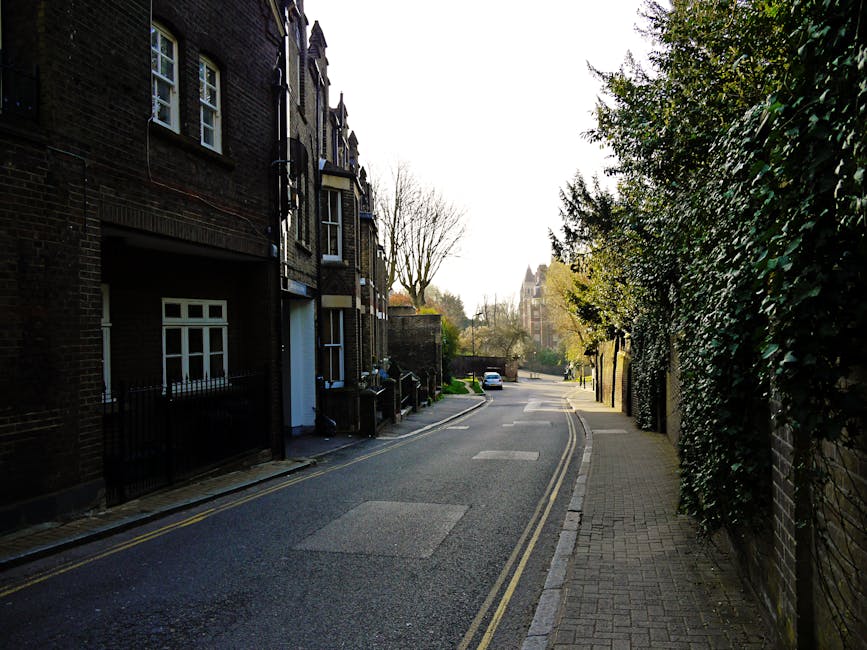
Petts Wood narrow street removals access tips: a practical guide for tighter moving days
If you are planning a move in Petts Wood, the street itself can be the biggest moving-day variable. A narrow road, limited turning space, a parked car on the corner, or a shared driveway can turn a simple relocation into a careful bit of logistics. That is exactly why Petts Wood narrow street removals access tips matter: they help you avoid delays, protect your belongings, and make life easier for everyone involved.
Truth be told, most moving problems in tight residential streets are not caused by the items being moved. They come from access. Where will the van stop? Can the crew safely carry furniture without blocking a neighbour's gate? Is there room to reverse, or is that a hard no before lunch? In this guide, we will walk through the practical side of moving in narrower Petts Wood streets, from planning and vehicle choice to parking, carrying routes, and the small decisions that make a big difference.
Why Petts Wood narrow street removals access tips Matters
Petts Wood has plenty of quiet residential streets, and that is part of the appeal. But quieter streets often mean tighter access, more on-street parking, and less margin for error when a van arrives. Even a well-organised house move can stall if a vehicle cannot stop close enough to the property.
Access matters for three simple reasons. First, time. Every extra metre from the van to the front door adds carrying time. Second, safety. Long carries over uneven pavements, garden paths, or steps increase the chance of knocks and trips. Third, neighbour relations. Nobody wants a removals vehicle blocking a dropped kerb or sitting awkwardly across a junction while someone is trying to get to school or work.
In our experience, the difference between a stressful move and a smooth one is often made before the van even arrives. A little advance planning can save a lot of awkward lifting, apologising, and waiting around in drizzle at the curb. Petts Wood narrow street removals access tips are really just sensible moving habits, but applied with a bit more care.
For people moving locally, these ideas often sit alongside broader move planning, such as booking the right service from house removals Bromley or arranging a suitable vehicle from the services overview. The right setup makes a narrow street feel much less narrow.
How Petts Wood narrow street removals access tips Works
At a practical level, access planning is about matching the vehicle, crew, and route to the space available outside your property. You are looking at the street width, parking restrictions, height limits if there is a low tree canopy or archway, the walking distance from the van to the door, and whether the furniture can be carried out in one clean line.
It helps to think in layers:
- The street layer: can a van stop nearby without causing a blockage?
- The property layer: are there steps, slopes, a narrow hallway, or a tight front path?
- The item layer: are there large items such as wardrobes, sofas, or a piano that need extra clearance?
- The timing layer: are you moving at the same time as school runs, deliveries, or commuter traffic?
The answer to each layer changes the plan. A standard van may be fine on paper, but in a very tight road a more compact vehicle or a well-positioned man with a van Bromley style service can sometimes make more sense than a larger truck. On the other hand, if you have a full family house, multiple beds, and lots of boxed contents, a larger vehicle or a coordinated team may save time overall.
This is why access planning is less about guessing and more about reducing unknowns. You do not need perfection. You do need a realistic picture.
Key Benefits and Practical Advantages
Good access planning gives you benefits that are easy to feel on the day, even if they are not glamorous enough to make a moving checklist sound exciting.
- Less wasted time: the crew spends more time moving items and less time shuffling vehicles.
- Lower risk of damage: shorter carries mean fewer chances for furniture to get scraped on gates, steps, or kerbs.
- Less stress: you are not improvising on the pavement while someone asks, "Can we get in here?" every five minutes.
- Better coordination: the move feels organised, which helps everyone stay calm.
- Improved safety: clear access reduces trip hazards and awkward lifting angles.
There is also a hidden benefit: access planning helps you choose the right service. For example, some moves in tighter roads are best handled by a compact man and van Bromley option, while larger homes might need a more structured removal services Bromley approach. Knowing that early helps you avoid overpaying for the wrong vehicle, or under-booking and then scrambling.
And yes, the neighbours usually appreciate it too. That counts for something.
Who This Is For and When It Makes Sense
These tips are useful for anyone moving in or out of a street where space is limited, but they are especially helpful if you are in one of these situations:
- you live on a narrow residential road with parked cars on both sides;
- your property has a tight front path or a small set of steps;
- you are moving flats or maisonettes with shared access;
- you have large furniture that needs careful carrying;
- you are moving at short notice and cannot afford repeated delays;
- you need to coordinate a quick loading and unloading window.
It also makes sense for landlords, letting agents, and homeowners who are trying to coordinate move-in or move-out times without upsetting neighbours. If you are arranging a flat move, a dedicated flat removals Bromley service may be a better fit than a general load-and-go arrangement, simply because flat access can involve more stairs, tighter entrances, and fewer places to pause.
Students, too, often benefit from this kind of planning. Smaller moves can still become fiddly fast, especially when a narrow road meets a quick turnaround. If that sounds familiar, student removals Bromley may suit the scale of the job better.
Step-by-Step Guidance
Here is a straightforward way to handle a move where street access is tight.
- Measure and observe the access. Walk from the kerb to the front door. Notice where the corners pinch, where gates swing, and whether the route is level or awkward. If you can, do this at the same time of day as the move so you get a feel for parking pressure.
- Check for permanent obstacles. Low branches, bollards, narrow gates, cellar steps, and badly positioned bins can all become moving-day annoyances. They are tiny problems until suddenly they are not.
- Think about vehicle size early. A smaller vehicle may park closer and make the whole job easier. A larger van may still be suitable if there is a workable stopping point nearby, but do not assume this. If in doubt, ask the removals provider what they usually use for tight access.
- Plan the carry route. Choose the safest path from the property to the vehicle. Avoid routes that cross flowerbeds, slippery paving, or shared entrances where possible.
- Clear the loading zone. Move personal cars, bins, bikes, and anything else that could block the van or create trip hazards. This sounds obvious, but it gets forgotten all the time.
- Prepare awkward furniture in advance. Remove drawers if safe to do so, disconnect appliances properly, and wrap corners. For larger or fragile items, consider specialist support such as furniture removals Bromley or even piano removals Bromley if the item really is too delicate to improvise with.
- Keep a contact number handy. If the van has to stop a little further away than planned, quick communication matters. A five-second call can save ten minutes of guesswork.
- Build in a buffer. Narrow streets often create small delays. A neighbour's car, a delivery van, or a momentary blockage can happen. It is better to have ten spare minutes than to be pushing a deadline with furniture in hand.
A small detail, but a useful one: if the street is known to be busy early in the morning, consider a slightly later start or a quieter loading window. Sometimes the best access tip is timing, not equipment.
Expert Tips for Better Results
The following points come from the kind of practical experience that only shows up once a few awkward streets have been tackled. Nothing flashy. Just the stuff that keeps a move running.
- Use the shortest safe carry route, not the shortest visible one. The "obvious" route is not always the safest if it means crossing a wet patch, a low wall, or a narrow gate.
- Take a quick photo of the parking layout. It can be surprisingly helpful when discussing access in advance with a removal company.
- Label bulky items by room and priority. If the van has to stop a little further away, the crew needs clear order, not a mystery pile of boxes.
- Use blankets, straps, and corner protection. Access pressure often causes damage at the point where items pivot through a doorway or gate.
- Protect neighbours' space. Keep pathways clear and avoid leaving items on shared land without checking first. A polite conversation goes a long way. Really, it does.
- Ask about contingency planning. Good movers will have a backup if the van cannot park exactly where expected.
If your move has several layers of complexity, it can also help to review the provider's wider approach to risk and handling. Pages like insurance and safety and health and safety policy are useful when you want reassurance that lifting, loading, and access planning are being treated seriously.
And if you are the kind of person who likes a backup plan for the backup plan, you are not alone. Narrow streets have a way of making sensible people slightly over-prepared. Fair enough.
Common Mistakes to Avoid
Most access issues are avoidable. The tricky part is that they are often only obvious after the van has arrived.
- Assuming a large van will fit because a car does. A moving vehicle needs more room for turning, loading, and safe stopping.
- Ignoring parked cars that usually "won't be there". They may be there. On moving day, they often are.
- Forgetting about door swing and stair width. A sofa may technically fit through the front door but still be impossible to angle safely.
- Leaving parking decisions until the morning of the move. By then, the best space may already be taken.
- Not telling the removals team about access problems in advance. This is one of the fastest ways to create a slower, more expensive day.
- Blocking the route with loose items. Shoes, plant pots, toys, cables, and recycling boxes seem harmless until someone is carrying a fridge.
A particularly common one is underestimating how long a "short" carry becomes when repeated twenty times. You notice it at about 11:15am, usually after the third box of books. Books are sneaky like that.
If you are unsure how much help you need, it is often safer to compare your options before moving day. A good starting point is to look at removal companies Bromley and think carefully about whether your move needs a simple van service, a fuller team, or storage as part of the plan via storage Bromley.
Tools, Resources and Recommendations
You do not need a huge toolkit to make access work better. A few useful items and habits can go a long way.
| Tool or resource | Why it helps | Best for |
|---|---|---|
| Measuring tape | Checks door widths, hallway space, and furniture dimensions | Planning before the move |
| Photos of the access route | Helps explain a tight entrance or awkward turning area | Getting an accurate quote or crew brief |
| Furniture blankets and straps | Reduces knocks while navigating narrow paths | Large or valuable items |
| Room labels | Makes unloading faster when the carry route is longer than expected | Family homes and mixed loads |
| Advance quote guidance | Helps match service type to access difficulty and move size | Budgeting and planning |
For people still comparing service types, the most useful pages are usually the ones that explain how the move will be handled rather than just naming a package. A good example is the man with van Bromley option for lighter loads, or removal van Bromley if you need something more defined and capacity-led.
If you are planning with a budget in mind, it is sensible to review pricing and quotes before you lock anything in. Access can affect cost, but the point is to understand why, not to be surprised by it.
Law, Compliance, Standards and Best Practice
For narrow-street removals, the most relevant compliance concerns are practical rather than dramatic: parking rules, access safety, considerate loading, and the duty to avoid causing preventable obstruction or damage. In the UK, moving companies are expected to operate responsibly, and customers should also do their part by giving accurate access information.
That usually means:
- being honest about street width, parking pressure, and steps;
- not assuming a van can stop anywhere for free or indefinitely;
- keeping pavements and entrances as clear as possible;
- following sensible manual-handling practice;
- checking terms, insurance cover, and cancellation conditions before booking.
There is also a best-practice element around communication. If access looks tight, say so early. Good operators can often adapt, but only if they know what they are adapting to. That is why pages such as terms and conditions and health and safety policy matter more than many people realise. They show how the company approaches the practical side of work, especially where lifting, parking, and route planning are concerned.
For moves with sensitive items, it is also worth checking the provider's handling standards and any relevant coverage via insurance and safety. That is just sensible housekeeping, really.
Options, Methods, or Comparison Table
There is no single best access solution for every Petts Wood move. The right choice depends on the size of the load, the street layout, and how much carrying distance you can tolerate.
| Method | Best for | Pros | Trade-offs |
|---|---|---|---|
| Compact man and van | Small to medium loads, very tight streets | Easier parking, quicker positioning | May require more trips for larger homes |
| Standard removal van | Typical household moves with workable access | Good balance of capacity and efficiency | Needs enough street space to manoeuvre safely |
| Full removals team | Larger homes, heavy furniture, mixed access challenges | Faster loading, more lifting support | Usually more expensive than a simple van booking |
| Partial move plus storage | Staged moves, delays, or awkward handover timings | Reduces pressure on the day | Requires extra planning and a second step |
If you are moving out of a property in a tight road and the timing is compressed, a same-day option can sometimes help, especially if access windows are limited. For that, same-day removals Bromley is worth reviewing. And if you are comparing fast-response availability, the article on same-day Bromley man and van availability and rates can help frame expectations.
For more context on local moving patterns and what people usually face in the area, the article on Bromley removals BR1 BR2 price guide what to know is a useful read before you request a quote.
Case Study or Real-World Example
Here is a realistic example. Imagine a two-bedroom home on a quiet Petts Wood side street. The road is narrow, parking is half full, and the front path only allows one person to carry at a time. Nothing unusual, but enough to cause friction if nobody has thought it through.
The move goes better when the following happens in advance:
- the customer sends photos of the street and frontage;
- the removals team brings a smaller vehicle rather than assuming a larger one will be fine;
- the homeowner moves their own car the night before;
- large furniture is wrapped and prepped before the team arrives;
- the loading route is kept free of bins and garden clutter.
On the day, the van stops a little further away than ideal because of another parked vehicle. No drama. The crew already knows this is possible, so the load plan adjusts quickly. Boxes go first, then the awkward sofa, then the heavier items once the route is clear. The whole thing still takes time, but not the kind of time that feels like the day is slipping through your fingers.
Key takeaway: In narrow streets, a "good enough" access plan beats a perfect one that exists only in your head. The move gets easier when the route, vehicle, and timing are all thought about together.
That is usually the difference between calm and chaos. Small difference. Big effect.
Practical Checklist
Use this before moving day, preferably the evening before while you still have time to fix things.
- Confirm the exact moving date and arrival window.
- Send clear photos of the street, frontage, and entrance.
- Measure large furniture, doors, and any tight corners.
- Check whether a larger van can stop nearby or whether a smaller vehicle is smarter.
- Move your car and ask neighbours, if relevant, not to block the frontage.
- Clear bins, bikes, plant pots, and loose items from the loading path.
- Pack fragile items separately and label rooms clearly.
- Prepare access instructions for gates, intercoms, or shared entrances.
- Keep contact details handy for the driver or moving team.
- Review insurance, safety, and terms if you have not already done so.
If your move is more involved than expected, it can help to look at removals Bromley as a broader starting point, then narrow down to the best fit. Sometimes that extra minute of planning saves half an hour on the road. Or more. Sometimes much more.
Conclusion
Petts Wood narrow street removals access tips are really about avoiding friction before it starts. The right vehicle, the right timing, and a clear picture of the loading route can turn a difficult-looking street into a perfectly manageable move. That does not mean everything will be effortless, because moving rarely is, but it does mean you stay in control of the parts that matter most.
Be honest about access, plan for a little extra time, and choose a service that understands local street conditions. That combination will do more for you than any amount of last-minute rushing.
If you are comparing services, checking moving options, or trying to make sense of access on a tight street, start with the pages that explain the process clearly and give you room to choose calmly, not hurriedly. A measured move is usually a better move.
Get a free quote today and see how much you can save.
And if you are still weighing up the wider picture, the local stories and guides in the blog section can help you plan with a bit more confidence. No fuss. Just a steadier moving day ahead.
Frequently Asked Questions
What are the most important Petts Wood narrow street removals access tips?
The most important tips are to check parking space early, measure the carry route, send photos of the frontage, and choose a vehicle size that can stop safely. Access planning should happen before moving day, not during it.
How do I know if a van will fit on my street?
Look at the width of the road, the position of parked cars, nearby junctions, and whether a vehicle could stop without blocking driveways or causing unsafe congestion. If you are unsure, photos and a quick site discussion are usually better than guessing.
Should I use a smaller van for a narrow road move?
Often, yes. A smaller van can be easier to position in tight residential streets, especially where parking is limited. That said, the right answer depends on the size of your load and how many trips you are willing to make.
How far is too far for carrying furniture from the van to the door?
There is no fixed number, but the longer the carry, the more time, effort, and risk you add. Even a modest extra distance can matter when the load includes bulky furniture or multiple heavy boxes.
Do I need to warn the removals team about narrow access?
Yes, absolutely. The more clearly you describe the road, entrance, steps, and parking situation, the better the team can prepare. Surprises on moving day are rarely helpful.
What should I do if there is nowhere to park outside my house?
Tell the moving provider in advance and look at nearby legal stopping points, resident parking, or a slightly different load plan. Sometimes the van will need to stop further away, so the crew can work from a safe, realistic position.
Are flat moves harder in narrow Petts Wood streets?
They can be, mainly because flats often add stairs, shared entrances, or tighter internal access. That does not make them unmanageable, just worth planning carefully. A dedicated flat-focused service can help.
Can I move a large sofa or wardrobe through a narrow hallway?
Sometimes yes, sometimes no. It depends on the furniture shape, hallway width, turning space, and whether parts can be removed safely. Measuring beforehand saves a lot of guesswork and a bit of sweat.
How early should I book if the street access is difficult?
As early as you can, especially if the move involves a specific time window or a larger amount of furniture. Early booking gives you more room to plan access properly and compare service options.
Does narrow access make removals more expensive?
It can, because the move may take longer or require a different vehicle or more labour. The aim is not to spend more for the sake of it, but to match the service to the reality of the street.
What if access changes on moving day because of parked cars?
That happens. A good plan includes some flexibility. If a van cannot stop exactly where expected, the crew may adjust the load route or parking position. The key is to keep communication open and stay calm.
Where can I learn more about the moving options available?
You can review the services overview and compare it with related pages such as man with a van Bromley, house removals Bromley, and furniture removals Bromley depending on what you are moving.
Is it worth taking photos of the street before I book?
Yes. Photos help explain the access better than a quick description ever can. A couple of clear images of the road, gate, and frontage can make planning much easier and reduce misunderstandings later.